Last year my work colleague Ak Sabbagh, who often has moments of startling wisdom, wrote a blog about the similarity between Astronoauts and Business Coaches in which he explained that the gift they both have is PERSPECTIVE. To quote from Ak’s blog –
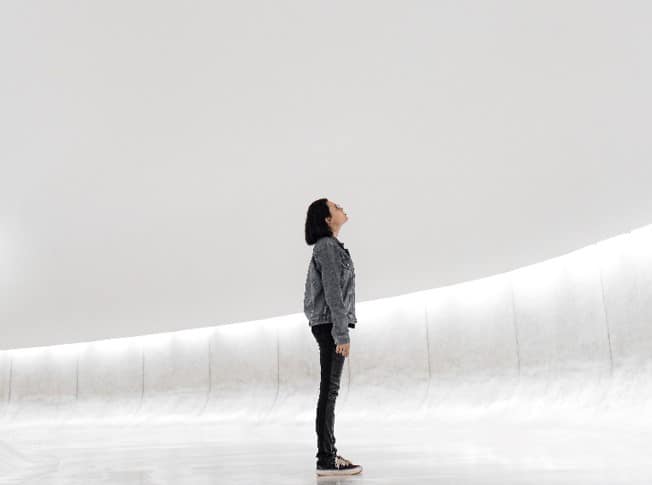
It is a phenomenon called the “overview effect” – described by space philosopher and author Frank White as “seeing the Earth from a distance, and realising the inherent unity and oneness of everything… The viewer moves from identification with parts of the Earth to identification with the whole system.”
The “Overview Effect” was brought back down to earth in COVID-19 and became a powerful exercise regime for keeping our coaching business and our clients’ businesses fit during lockdown. Lockdown caused society and businesses everywhere to cease ‘business-as-usual’ and stay still, whilst keeping on going – and that was the challenge that sent our minds and feelings into turmoil.
What immediately emerged, no matter how aware and well coached we were, was a reactive response of – ‘well that means I can’t do the things that keep me and my business healthy anymore, so I’ll just have to get fat and unhealthy!’ As a collective we felt disempowered because we were ‘prevented’ from making our own choices.
According to neuroscience, funny things happen in the brain, when we feel like this – and we probably don’t need neuroscience to tell us that, do we! Our brain loves ‘autopilot’ and feels mighty uncomfortable when things aren’t ‘normal’, as Lyra Puspa, leadership coach and neuroscientist explained to me. In practice the brain unconsciously feels secure when the past, present and future are connected.
One client told me how helpless he felt when lockdown was announced and swimming pools closed because his ‘normal’ exercise regime is a 5am swim three times a week. This keeps his body, particularly his back, fit. He blamed the government for making him ‘fat and unhealthy’. In desperation he decided to try a new exercise, walking, allowed under the COVID-19 regulations. He found it wasn’t too bad, although it was slow and not really keeping him fit. He needed to jog, but knew he couldn’t because his knees wouldn’t stand it. However, he tried it once and came back feeling invigorated and no sore knees. Now he is jogging his way through COVID-19, staying fit to emerge from lockdown with a new level of fitness and equipped if this situation comes back.
What is happening from a neuroscience perspective is that to manage the discomfort caused by being prevented from swimming, the brain looked for things that in the past have provided security. This is called Attachment – and the past things we are attached to affect the present and will flow through to the future.

However, the brain is stimulated by new things and also likes familiar or old things. New things, different behaviours can be exhausting for the brain as they demand energy. Therefore, the brain attaches to Familiar patterns because it requires less energy when changes take place. The attachment to something that worked in the past and is familiar, makes us think we are in control of the situation and have Agency. Our brain tells us it’s okay, “I know what is going on here, even if things are different out there”. This is called Certainty and is what helps our brains grow. Uncertainty gives rise to fear which shrinks our brain, as Lyra explained it. Hence, my client’s reaction to changes with lockdown can be explained by neuroscience. His past attachment to swimming and feeling of helplessness when it was taken away by government lockdown, in the present made him view the future as fat and unhealthy.
The same applies in our business lives. One client, a business owner of a highly skilled dental practice was significantly impacted because her industry was the first to be totally shut-down when COVID-19 emerged. Despite having the initial response of ‘What are we expected to do NOW???’ this client decided to use a low-energy activity, to ‘go digital’. This felt a bit like walking as an exercise, it wasn’t really making the business fit, just keeping things moving. This client extended her energy to keeping ‘business-fit’ by building her leadership team and strengthening them to lead the practice out of lockdown, fitter and stronger than ever. Now that the business can return to it’s pre-COVID business regime, there is a new energy in the place and a strong and well-equipped leadership team to manage things back to normal.
In this new normal of unknown, uncertain times, as we move out of lockdown, we can stay fit and healthy by adjusting our view from focus on the individual parts of our business, to view this from above, looking at the entire business system itself and strengthen and develop the parts that make the whole strong.
In this age of social distancing, creating a space which allows you to objectively consider your business is a healthy move towards Finding a New Business Balance.
If you don’t want to wait around until the ‘new normal’ is dictated upon you, but you do want to pro-actively create, define and shape the new normal for yourself and your business, then join us on 21st August at 9am with other business leaders and owners for a Zoom conversation to discuss what we’ve collectively learned, what we take forward, leave behind, and how we Find a New Balance.
Join us to Find a New Business Balance , click here to register now
Margaret Armitage
Coach & Mentor
Beckon Business